Filter systems for the chemical industry: controlling air pollution and reducing environmental impact
The chemical industry places particularly high demands on air pollution control. In hardly any other industrial sector are the processes, materials and emissions so diverse. Raw materials are stored, conveyed, mixed, heated, cooled, dried, ground, bottled, neutralized or chemically reacted. This can result in various possible air contaminants that must be reliably detected, treated and separated. Modern filter systems make an important contribution to keeping production areas cleaner, protecting employees, relieving pressure on systems and taking the environment into account in a sustainable manner.
Unlike many standardized manufacturing processes, filter technology in the chemical industry must be tailored particularly precisely to the respective material and process. Air contaminants can occur as dust, smoke, aerosol, mist, vapor, gas or odor. Some substances are dry and free-flowing, others are sticky, moist, corrosive, reactive, flammable or critical to health. That's why a blanket filter solution is usually not enough. What is needed are individually designed filter systems that combine technical performance, operational safety, material durability, ease of maintenance and environmental requirements.
Possible air pollution in the chemical industry
In chemical production, air pollution occurs in many different places. Dust or vapors can be released during the delivery and storage of raw materials. When filling silos, emptying sacks or big bags, dosing powders and transferring liquid substances, particles or gaseous components get into the air. Reactors, mixers, dryers, granulators, grinding plants, filling stations and packaging lines can also be sources of emissions.
Possible air contaminants include chemical dust, fine dust, powder particles, product abrasion, catalyst dust, pigments, additives, salts, acid mist, alkaline aerosols, solvent vapors, odors, reaction by-products or droplets from liquid processes. In certain production areas, smoke particles, thermal decomposition products or dusty residues from drying and grinding processes may also occur.
The particular challenge is that these contaminants differ greatly. A mineral dust behaves differently than an organic powder. A solvent vapor requires different treatment than an acidic mist. A moist aerosol has different requirements for separation than a dry particulate matter. That's why every effective filter solution begins with a close look at the material properties, concentration, air volume flow and process conditions.
Environmental aspects as a central component of air pollution control
In the chemical industry, air pollution control is not just a question of internal cleanliness. It is also closely linked to protecting the environment. Exhaust air that is unfiltered or inadequately treated can release particles, odors or gaseous components into the environment. This can burden the neighborhood, waste resources and worsen a company's environmental footprint.
Well-designed filter systems help to reduce emissions and better control material flows. Separated particles can be collected, disposed of, or, in certain cases, reintroduced into the process. Odor pollution can be reduced through appropriate filter stages. Dust emissions can be limited before they enter the production hall or the outside air.
Energy consumption also plays a crucial role. A filter system should not only provide reliable separation but also be economical to operate. Excessive pressure losses, unfavorable piping layouts, or incorrectly sized fans cause unnecessary operating costs. A well-thought-out design helps to optimally coordinate air volumes, filter areas, fan performance, and cleaning efficiency. This allows environmental protection and efficiency to be combined.
Filter systems for dusty substances and powder processes
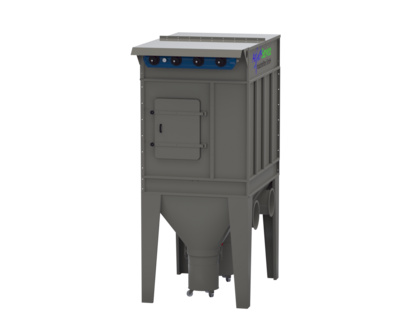
Many chemical products are processed in powder form. These include basic chemicals, additives, pigments, plastic additives, fertilizer components, reaction products, fillers, and intermediates. When conveying, mixing, grinding, sieving, drying, or filling such substances, dust-laden air streams are often generated, which should be captured directly at the source. Filter systems for chemical industry Cardridge Filter
Depending on the application, various filter systems are suitable for dusty contaminants. Dry filters, bag filters, cartridge filters, or multi-stage filter systems can remove particles from the air stream and discharge them in a controlled manner. Adapting the filter to the specific type of dust is crucial. Fine particles require high separation efficiency. Abrasive substances demand robust materials. Moist or adhering dusts place special demands on the filter medium and cleaning process.
Automatic filter cleaning can help maintain stable suction performance. The collected dust is removed from the filter surface and gathered in a collection area. Discharge can be achieved via containers, airlocks, screw conveyors, or closed systems. Controlled dust handling is particularly important for critical or valuable substances to prevent product losses, cross-contamination, and unnecessary exposure.
Filter Systems for Vapors, Gases, and Odors
Not all potential air pollutants in the chemical industry are visible. Solvent vapors, gaseous reaction products, or odor-intensive components can be relevant even if no visible dust cloud is generated. For such applications, filter systems are needed that go beyond simple particle separation.
Depending on the substance, adsorption filters, activated carbon filters, wet scrubbers, scrubbers, or combined exhaust air purification systems can be used. While particle filters retain solid particles, other filter stages can reduce gaseous or liquid components from the airflow. Odors often require precise analysis, as different substance groups necessitate different treatment methods.
Temperature, humidity, and chemical reactivity also play a crucial role. A filter system for solvent-containing exhaust air must be designed differently than a solution for acidic aerosols or alkaline vapors. Material selection, sealing technology, corrosion protection, and maintenance access are therefore key design factors.
Capture directly at the process: The first step to effective filtration
A filter system can only operate optimally if contaminants are reliably captured. In the chemical industry, capture directly at the process is therefore particularly important. Emissions should be extracted wherever they originate: at filling openings, transfer points, reactor lids, mixers, dryers, filling heads, laboratory workstations, or conveyor systems.
The technical solution can vary considerably. Options include closed process connections, extraction hoods, enclosures, point extraction systems, extraction tables, cabins, or integrated machine connections. For critical substances, closed capture can be advantageous to minimize contact with the ambient air. For less critical processes, a locally positioned extraction system may suffice.
It is crucial that the capture system supports, rather than hinders, the workflow. Operators must be able to supply materials, change containers, clean equipment, and perform maintenance. At the same time, the airflow must be designed to prevent the uncontrolled escape of dust, vapors, or aerosols.
Material resistance and safety in chemical applications
Filter systems in the chemical industry often have to handle challenging substances. Corrosive vapors, aggressive dusts, humid air currents, or reactive components can put a strain on filter housings, piping, seals, and fans. Therefore, material selection is a crucial part of the planning process.
Depending on the application, stainless steel, coated steel structures, plastics, special sealing materials, or corrosion-resistant components may be required. The resistance of the filter media must also be tested. An unsuitable filter material can be damaged by chemical exposure, lose its separation efficiency, or lead to frequent maintenance.
Safety is another important aspect. In some processes, flammable dusts, explosive vapors, or ignitable mixtures may occur. In such cases, the filter system, piping, fan, and control system must be considered accordingly. Protective measures may be necessary depending on the application, such as grounding, explosion-proof components, suitable decoupling, or integrated safety devices. A specific hazard assessment of the process is always essential.
Multi-Stage Filter Systems for Complex Exhaust Air Flows
In many chemical plants, a single filter stage is insufficient. When dust, aerosols, vapors, and odors are present simultaneously, multi-stage filter systems are advantageous. These systems combine various processes to treat the airflow step by step.
One possible configuration, for example, might consist of a pre-separator for coarse particles, a main filter stage for fine dust, and a downstream stage for odor or gas reduction. In other cases, a wet scrubber can be used upstream of another filter module to reduce moist or chemically contaminated components. The precise sequence of the filter stages depends on the material properties and the desired outcome.
Multi-stage systems offer the advantage that each stage performs a clearly defined task. This protects filter elements, extends service life, and improves separation efficiency. At the same time, maintenance work can be planned more effectively because individual components can be monitored and replaced separately.
Operation, Maintenance, and Monitoring
A filter system remains effective only if it is operated correctly and regularly inspected. In the chemical industry, stable operating conditions are particularly important because altered pressure conditions, clogged filters, or damaged components can directly impact emissions and process safety.
Differential pressure monitoring, sensors, level control, automatic cleaning, and clearly defined maintenance intervals support reliable operation. For critical substances, additional measures such as closed filter changes, low-dust disposal, or special cleaning procedures may be required. The goal is to perform maintenance safely, transparently, and with minimal production downtime.
Documentation also plays a crucial role. Operators want to be able to track how the filter system is working, when filter elements were changed, and whether operating parameters are changing. Effective monitoring creates transparency and helps identify problems early.
Customized Filter Systems for the Chemical Industry
The chemical industry doesn't need off-the-shelf, standard solutions, but rather filter systems that are precisely tailored to the process. A fine chemicals plant has different requirements than a facility producing basic chemicals, specialty chemicals, pigments, additives, cleaning agents, coatings, or intermediates. Laboratory, pilot, and production facilities also differ significantly.
Therefore, every solution begins with an analysis of potential air pollutants. What substances are generated or released? Are they present as dust, aerosols, vapor, or gas? Are they corrosive, flammable, moist, sticky, or odorous? What volumes of air need to be treated? What are the requirements regarding environmental protection, occupational safety, maintenance, and energy efficiency?
This information is used to create a filter system that specifically reduces air pollutants, protects the environment, and supports the production process. For chemical plants, this means greater control over emissions, cleaner work areas, better-protected facilities, and a technological foundation for responsible production.
Professional filter systems are therefore a key component of modern air pollution control in the chemical industry. They help to detect potential air pollutants, treat exhaust air streams, and reduce environmental impacts – reliably, economically, and tailored to the specific requirements of chemical processes.