Reliably detect and filter air pollutants in the automotive industry
The automotive industry is among the most demanding sectors of industrial manufacturing. Numerous processing methods converge in vehicle production, at automotive suppliers, in body construction, component manufacturing, and surface finishing. Cutting, welding, grinding, milling, deburring, coating, bonding, assembly, and testing are all carried out. Many of these processes generate potential airborne contaminants that must be detected early and reliably removed.
A modern manufacturing environment therefore requires more than just individual extraction units. What's needed are coordinated solutions comprising dust filters, cartridge filters, intelligently designed capture systems, and, where specific risks exist, specially designed ATEX filters. The goal is to capture particles, dust, fumes, and aerosols at their source, before they spread throughout production halls, machine areas, or assembly zones.
Especially in the automotive industry, clean air and stable process conditions directly impact quality, availability, and efficiency. Contaminants can not only affect work areas but also compromise sensitive components, surfaces, sensors, robotics, and manufacturing equipment. Appropriate filter technology therefore supports not only occupational health and safety, but also consistently high production quality.
Potential Air Pollution in the Automotive Industry
The type of air pollution depends heavily on the specific manufacturing step. In car body construction, welding and laser welding can generate fine fume particles. Grinding, deburring, or cutting metal parts releases metallic dust and particles into the ambient air. Depending on the material, different types of dust can occur during the processing of aluminum, steel, plastics, or composite materials.
Potential air pollution also arises during the production of drive components, brake parts, axle systems, battery modules, housings, or structural components. This includes, for example, grinding dust, metal dust, plastic dust, oil mist, emulsion droplets, fume particles, or residues from thermal processes. In some areas, sticky, fibrous, or very fine particles may also be present, placing special demands on extraction and filter cleaning.
Therefore, when designing a filter system, it is crucial to carefully consider the specific emission source. What types of particles are generated? How fine are they? Are they dry, moist, oily, or sticky? Are they generated continuously or only during specific process phases? Does a single processing station need to be extracted, or an entire production area? Only once these questions are answered can a technically and economically viable solution be planned.
Filter Technology for the Automotive Industry in Manufacturing
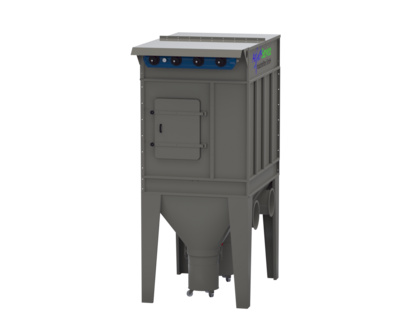
A dust filter plays a crucial role in automotive manufacturing: It separates disruptive particles from the extracted airflow and contributes to improving air quality in the workplace. Effective dust separation is particularly important in dry processing operations such as grinding, brushing, deburring, polishing, or mechanical cutting.
In the automotive industry, dust filters often need to offer high availability. Production lines are tightly scheduled, downtime incurs costs, and maintenance work should be as predictable as possible. Therefore, the selection process depends not only on pure filter performance. Factors such as robust construction, easy accessibility, low pressure losses, efficient cleaning, and effective dust discharge also play a significant role.
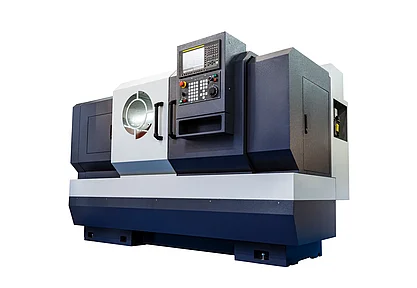
Depending on the application, dust filters can be used as central systems for multiple workstations or as compact, standalone solutions directly on machines. For automated manufacturing cells, robotic workstations, or machining centers, integration into the overall system design is particularly important. The filter must be suitable for the air volume, dust concentration, and production process without unnecessarily complicating operation or maintenance of the system.
Cartridge filters are suitable for fine particles and limited space.
Cartridge filters are a suitable solution in many areas of the automotive industry when large filter areas are required in a compact space. The cylindrical filter elements offer a large surface area and can therefore process large volumes of air in a comparatively small footprint. This is particularly advantageous where production space needs to be used efficiently.
Cartridge filters are used, among other things, in grinding workstations, welding processes, laser cutting systems, test benches, robotic cells, and component machining. The filter cartridges retain fine particles while the cleaned airflow continues. Many systems feature automatic cleaning, in which the filter elements are cleaned of adhering dust during operation or breaks. This keeps suction performance more stable and allows for better planning of maintenance intervals.
For demanding applications, selecting the right filter medium is crucial. Depending on the type of dust, antistatic, oil- and water-repellent, or particularly fine-filtration filter media may be appropriate. The design of the pre-separation stage can also be relevant, for example, when sparks, coarse particles, or large volumes of dust are present. A cartridge filter should therefore always be tailored to the process, material, and operating conditions.
Capture systems: The most important step begins at the source
For filter technology to work effectively, airborne contaminants must be captured as close to their source as possible. This is precisely the task performed by capture systems. They form the link between the process and the filter system and significantly influence the efficiency of the entire extraction system.
In the automotive industry, there are numerous capture options. These include extraction hoods on machine tools, integrated machine connections, extraction tables, point extraction systems, capture elements on robot cells, flexible extraction arms, or complete enclosures. For automated processes, a permanently installed capture system directly at the station is often the most practical solution. For manual workstations, however, a flexible solution that can be adapted to different components and working positions may be necessary.
A good capture solution considers more than just the technical extraction performance. It must also be ergonomic, reliable, and easy to maintain. If a capture system is perceived as disruptive in daily work, it is often not used optimally. Therefore, airflow, workpiece access, freedom of movement, cleaning options, and integration into existing systems should be planned from the outset.
ATEX Filters for Explosive Dust-Air Mixtures
In certain areas of the automotive industry, combustible dusts or ignitable mixtures can be generated. This can be relevant, for example, when processing certain light metals, plastics, coating residues, or powdered materials. As soon as an explosive dust-air mixture cannot be ruled out, the extraction and filtration system must be evaluated and designed accordingly.
An ATEX filter is designed for such applications and is combined with suitable protective measures. Depending on the system design, these can include pressure relief, flameless relief, check valves, explosion isolation, grounding, antistatic filter media, or spark arrestors. The necessary measures depend on the dust properties, the dust quantity, the system geometry, and the risk assessment.
A holistic view of the system is essential. An ATEX filter alone is insufficient if the collection system, piping, fan, dust extraction, and control system are not also properly considered. For the automotive industry, this means that safety must be taken into account as early as the planning phase to ensure reliable and practical operation of the system.
Filter solutions for quality, efficiency, and process stability
The demands in vehicle production and at supplier companies are high. Components must be manufactured with precision, surfaces protected, and production areas kept clean. A suitable extraction and filtration system can help reduce particle deposits, decrease cleaning efforts, and make production processes more stable.
Constant extraction performance is particularly important in automated lines. Fluctuations in airflow can impair capture and cause particles to enter unwanted areas. Modern systems can therefore be equipped with differential pressure monitoring, demand-based fan control, automatic filter cleaning, and interfaces for system control.
Careful planning also pays off from an energy perspective. Excessive air volumes cause unnecessary operating costs, while insufficient air volumes compromise capture. The right balance between air volume, capture velocity, filter area, and system control is crucial for economical operation.
Individually planned air purification for the automotive industry
No two production lines are alike. A supplier of metal components has different requirements than a plastics parts manufacturer, a car body builder, or a battery housing manufacturer. Therefore, dust filters, cartridge filters, capture systems, and ATEX filters should not be considered in isolation, but rather as part of a comprehensive air pollution control concept.
From analyzing potential air pollutants and selecting the appropriate filter technology to integrating it into existing production structures, this approach creates a solution tailored to the specific process. For companies in the automotive industry, this translates to greater control over emissions, improved workplace conditions, and a technological foundation for reliable, clean, and efficient production processes.