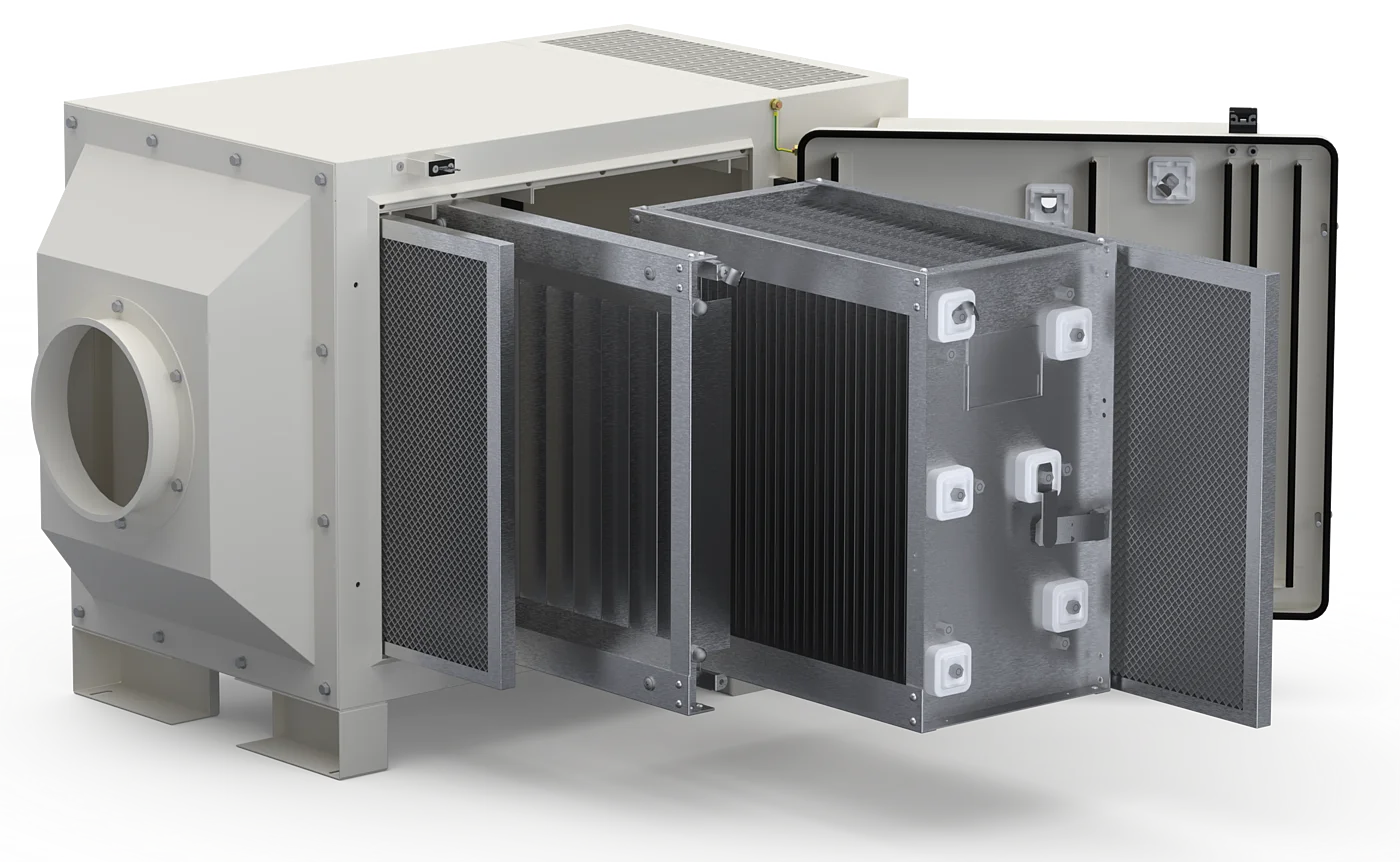
How an Electrostatic Air Filtration System Works
An electrostatic filter, also known as an electrofilter or electrostatic precipitator, is a highly efficient filtration system for cleaning air or gases, particularly for removing fine dust, smoke, oil mist, and aerosols. It is frequently used in industrial systems, ventilation systems, and industrial air-purification applications.
Basic Principle: Charging and Separating Particles / How an Electrostatic Air Filtration System Works
The operating principle of an electrostatic air filtration system is based on two central steps:
- Electrical charging of the particles
- Separation of the charged particles on collector surfaces
1. Ionisation – Charging the Particles
First, the contaminated air flows through the filter and enters what is known as the ionisation zone. This zone contains high-voltage electrodes that generate a very high electrical voltage, often several thousand volts.
This high voltage creates an electric field that ionises the air molecules. This means:
- Electrons are removed from the air molecules
- Negatively charged particles, known as ions, are created
These ions come into contact with the contaminants contained in the air, such as dust, oil mist, and smoke, and electrically charge them, usually with a negative charge.
2. Separation – Attraction Through Electric Fields
After being charged, the particles enter the separation zone. This zone contains parallel metal plates, known as collector plates, which are either positively charged or grounded.
The electric field between the plates causes the following:
- The negatively charged particles are attracted to the positively charged plates
- They collect on the plates and remain attached to them
- The cleaned air continues to flow through the system
Continuous Cleaning Process
A major advantage of electrostatic filters is that they do not become clogged in the same way as conventional filter mats. Instead:
- The separated particles are removed regularly
- This is carried out either manually or automatically, for example through rapping or washing
- The filter maintains its performance over the long term
Advantages of Electrostatic Filters
Electrostatic filtration systems offer numerous advantages over mechanical filters:
High Separation Efficiency
- Removes even the finest particles, including particles in the submicron range
- Particularly effective for oil mist and smoke
Low Pressure Drop
- Air can flow through the system with almost no obstruction
- Saves energy compared with dense filter media
Long Service Life
- No conventional filter replacement required
- Reusable components
Cost-Effectiveness
- Low operating costs
- Ideal for continuous operation in industrial systems
Typical Applications
Electrostatic filters are used in many different areas, including:
- Metalworking, for separating oil mist generated by metalworking fluids
- Commercial kitchen exhaust air, for separating grease
- Industrial exhaust gases
- Ventilation and air-conditioning systems
- Flue-gas cleaning
Limitations of the Technology
Despite their advantages, electrostatic filters also have certain limitations:
- Less effective for very coarse particles when no pre-separation stage is used
- Sensitive to moisture and certain gases
- Regular cleaning is required to maintain filtration efficiency
Conclusion
The operating principle of an electrostatic filter is comparatively simple but extremely effective: particles are electrically charged and then selectively removed from the air by means of an electric field.
This technology enables efficient, energy-saving, and sustainable air purification. It is particularly important in industrial applications where fine particles such as smoke, oil mist, or aerosols are generated.